FIRST MARKS
Scribbles carry meaning
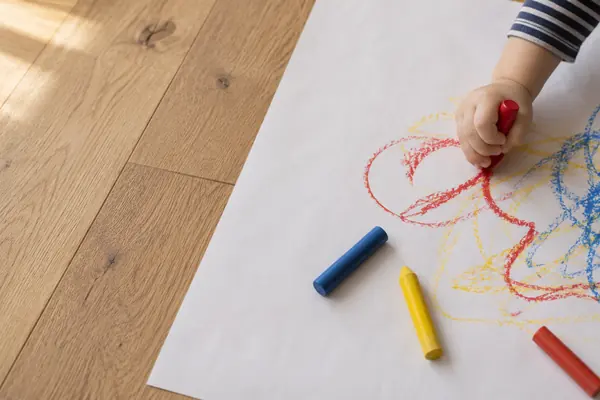
Under-threes start to make marks intentionally and sometimes give them a meaning, such as a mark that "says mummy" or stands for their name.
Find the stage abcdoodle.
WHAT THE EARLY YEARS GUIDANCE SAYS
Drawing comes before writing.
England's early years guidance follows children from their first deliberate marks to closed shapes, faces with details and a pencil held in a tripod grip, the hand skills that later carry the ABC.
Find the stage Read the short answer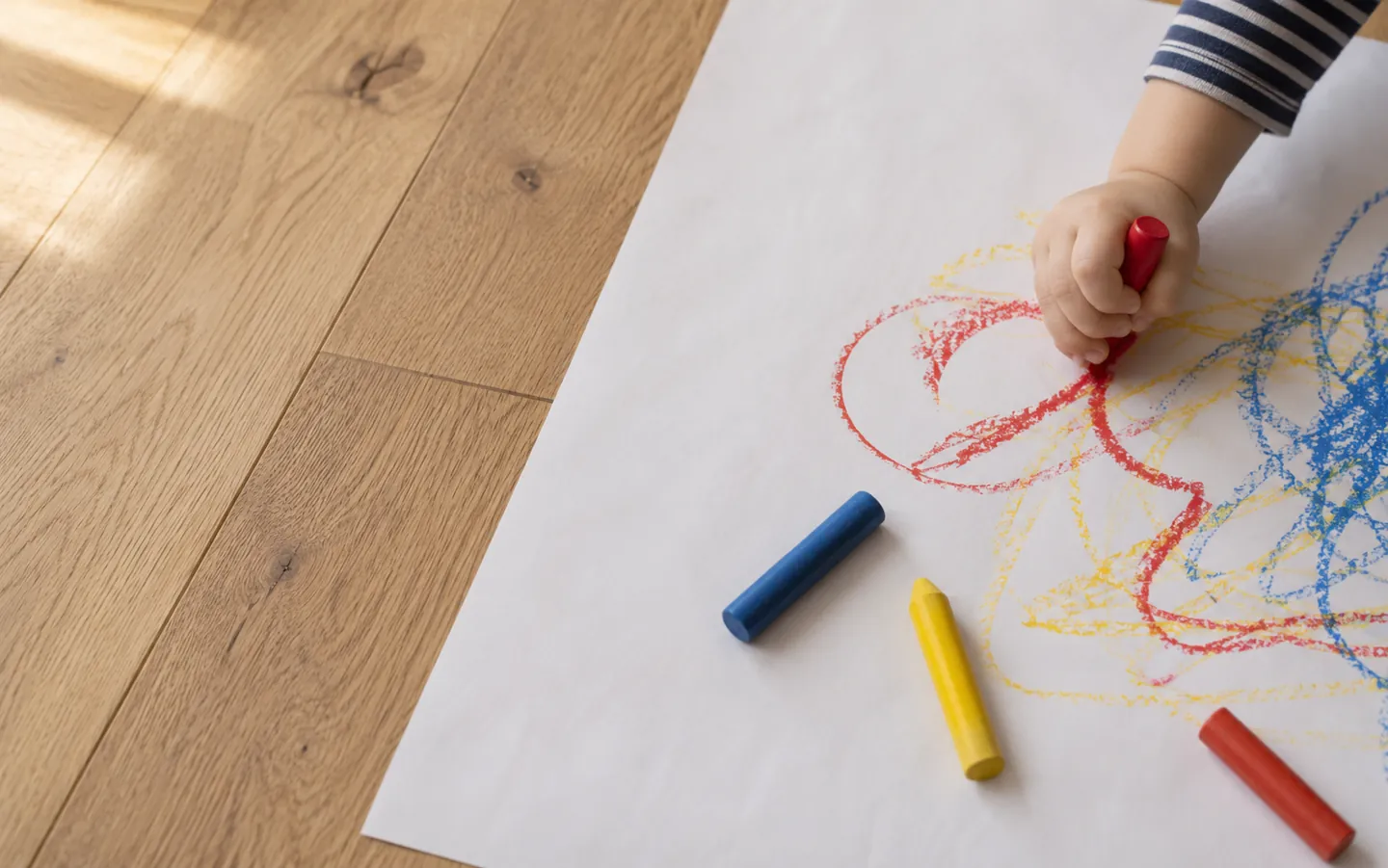
THE SHORT ANSWER
The guidance builds the hand step by step.
Big arm movements come before fine finger control.
FIRST MARKS
Under-threes start to make marks intentionally and sometimes give them a meaning, such as a mark that "says mummy" or stands for their name.
Find the stageSHAPES AND FACES
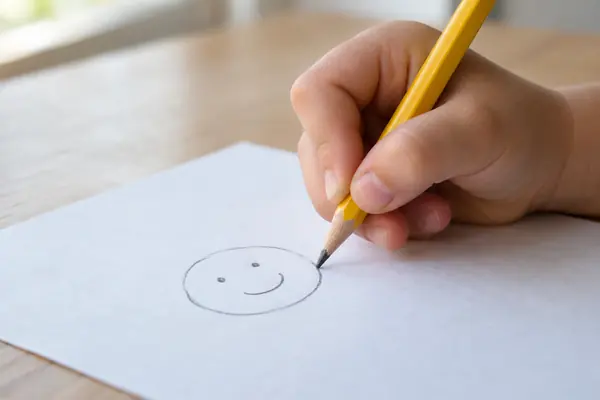
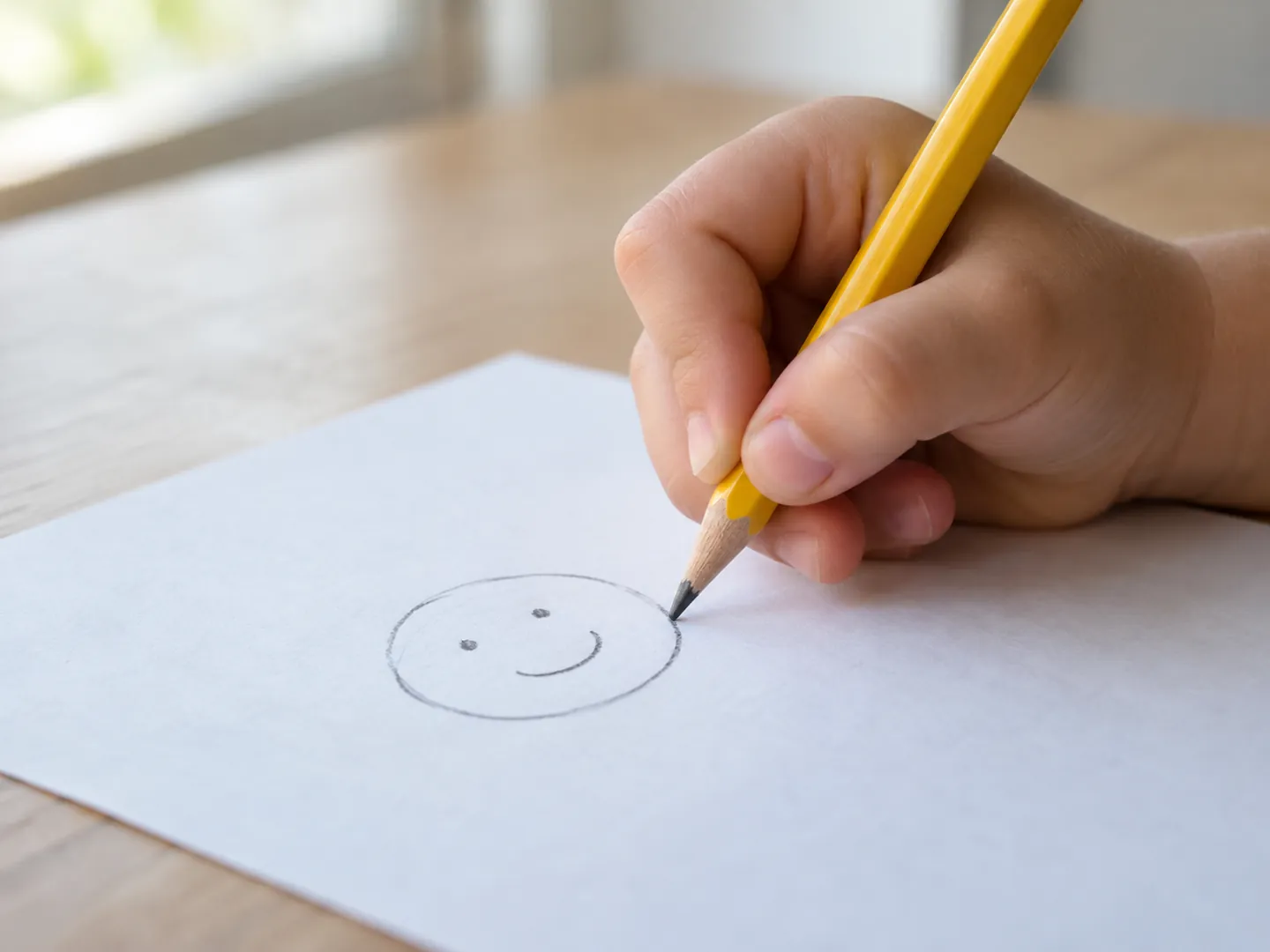
At 3 and 4, children learn to close a shape with one continuous line, then use it: a circle becomes a face, with details added.
See the researchBIG MOVEMENTS
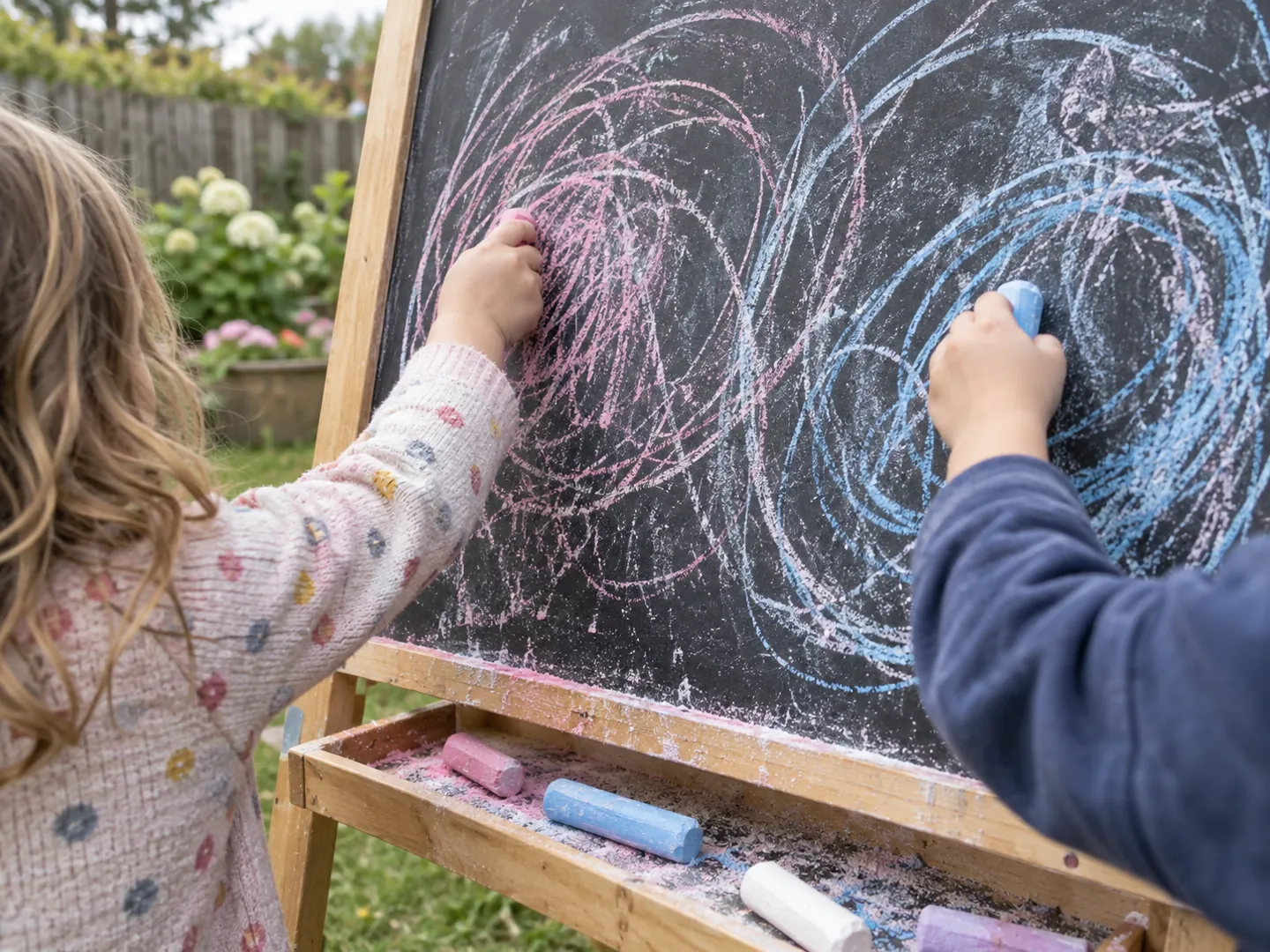
The guidance suggests painting and chalking on large vertical surfaces such as walls and easels, to build arm and shoulder movement.
Ideas to tryA QUICK STAGE CHECK
Pick what you see on the paper to find where it sits in England's early years guidance. The bar shows how much pencil control the stage asks for.
Based on Development Matters (DfE) and the EYFS statutory framework. Children develop at different rates; this is general information, not a developmental assessment.
TWO NUMBERS WORTH KNOWING
One figure on which hand children draw with,
one on a large study of four-year-olds' drawings.
HANDEDNESS · PSYCHOLOGICAL BULLETIN
People who are left-handed
≈ 1 in 10
A 2020 set of meta-analyses put the best overall estimate of left-handedness at 10.6%. Development Matters expects 3 and 4-year-olds to start showing a preference for a dominant hand.
DRAW-A-CHILD · KING'S COLLEGE LONDON
Twin pairs whose drawings were scored
7,752 pairs
Four-year-olds drew a child, scored 0 to 12 for features such as head, eyes and arms. Scores were moderately linked with later test results, and the lead author said parents should not worry if a child draws badly.
In the King's College London study, the correlation between drawing at 4 and intelligence scores at 14 was 0.20, which the researchers described as moderate. Drawing ability does not determine intelligence.
FOUR IDEAS FROM THE GUIDANCE
None of these needs special kit. They follow the examples Development Matters gives for supporting mark-making and drawing.
FROM DRAWING TO WRITING
Every year England's teachers assess reception children against 17 early learning goals. In 2024/25 gross motor skills again had the highest share of children at the expected level and writing the lowest.
Development Matters suggests encouraging children to draw freely, while teaching letter formation and checking pencil grip, so that correct formation becomes automatic, efficient and fluent over time.
QUESTIONS PEOPLE ASK
Development Matters describes babies and toddlers starting to make marks intentionally, exploring paint with fingers and tools, and sometimes giving a meaning to the marks they make.
The guidance describes the pen pinched between the ball of the thumb and the forefinger, supported by the middle finger, with the other fingers tucked into the hand. It calls it a comfortable grip that gives good control.
The EYFS early learning goal, at the end of reception, is to hold a pencil effectively in preparation for fluent writing, using the tripod grip in almost all cases. Children develop at different rates.
Around 1 in 10 people are left-handed, according to a 2020 meta-analysis. Development Matters simply expects 3 and 4-year-olds to start showing a preference for a dominant hand.
A King's College London twin study found a moderate link between drawings at 4 and test scores at 14. The lead author said parents should not worry if a child draws badly: drawing ability does not determine intelligence.
SOURCES
Each figure on this page comes from the sources below. Check them for the full detail and context.